Is It Safe to Wear Shapewear Every Day? A Comfort Guide
MayaYes, for most people, as long as it fits and you give your body breaks. That's the short answer from the doctors we cite below. In Cleveland Clinic's advice on wearing shapewear, Dr Jamile Wakim-Fleming says that, "worn with some common sense," shapewear is "perfectly safe." The problems doctors do see come from pieces that are too small, too tight or worn for too long.
This guide covers what "common sense" means in practice: the signs your shapewear is too tight, how many hours is sensible, when to take a break, and how to wash it so it keeps fitting well.
Key takeaways
- Shapewear is safe for most people when it fits and isn't worn round the clock.
- If it leaves a mark, it's too tight (Cleveland Clinic).
- Tingling, numbness, bloating or shallow breathing mean loosen it or take it off.
- Don't sleep in it, and take breaks on long days.
Is it safe to wear shapewear every day?
Regular wear is generally fine if it fits and you wear it for limited stretches, with breaks. In a 2024 BBC Science Focus article, London GP Dr Nish Manek advises wearing it "for limited periods and to take breaks if you notice it causing any issues." The risk isn't shapewear itself. It's wearing pieces that are too tight for hours without a pause.
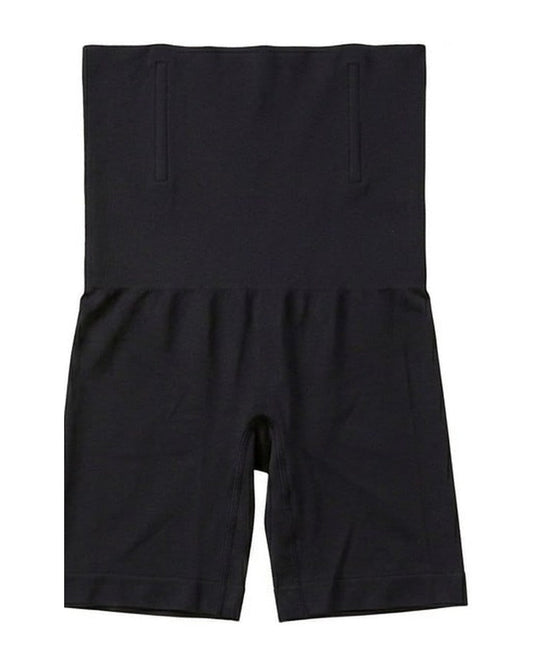
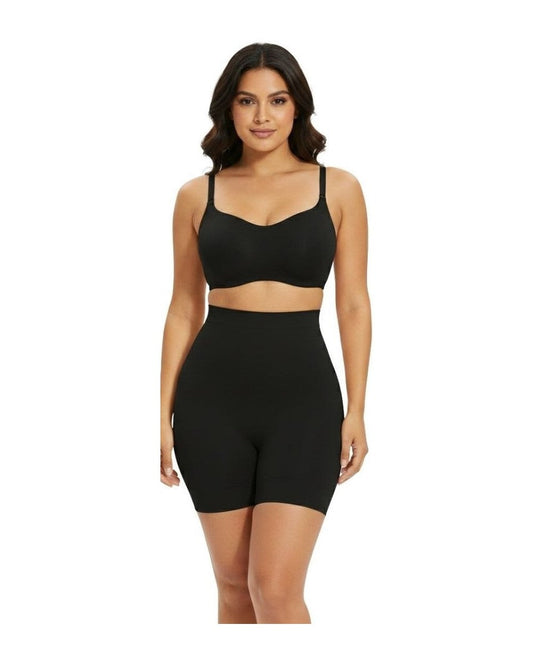
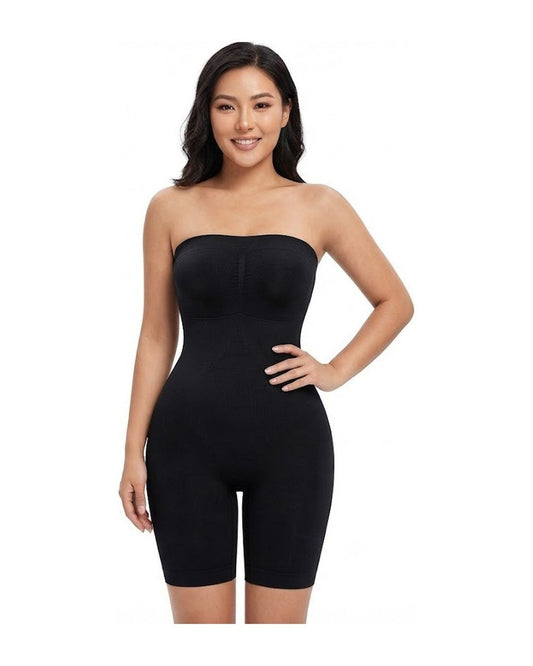
Think of it like a good pair of heels. Lots of people wear them often and happily, but nobody wears the wrong size all day, every day. A well-fitting, light everyday piece, such as high-waist shaper shorts, is a very different thing from squeezing into something two sizes too small for a party.
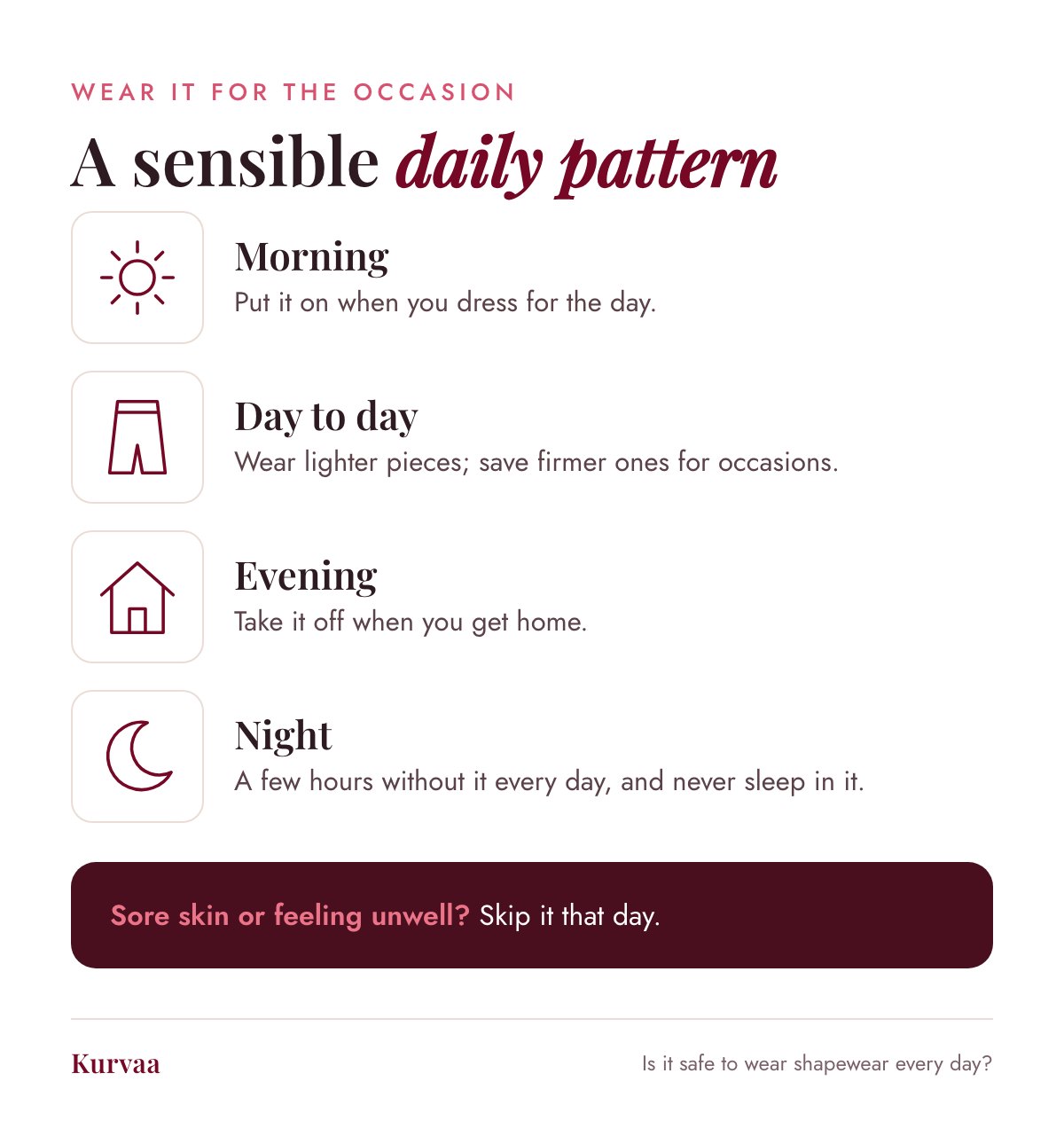
A sensible daily pattern looks like this:
- Put it on when you dress for the day, and take it off when you get home.
- Save firmer pieces for occasions, and wear lighter ones day to day.
- Have at least a few hours without it every day, and never sleep in it.
- Skip it on days your skin is sore or you feel unwell.
What are the signs your shapewear is too tight?
The simplest test is marks on your skin. Cleveland Clinic's doctor puts it plainly: if it leaves a mark, it's too tight. Shapewear should feel firm and smooth, never painful. If you notice any of the signs below, loosen it, switch to a lighter piece or take it off.
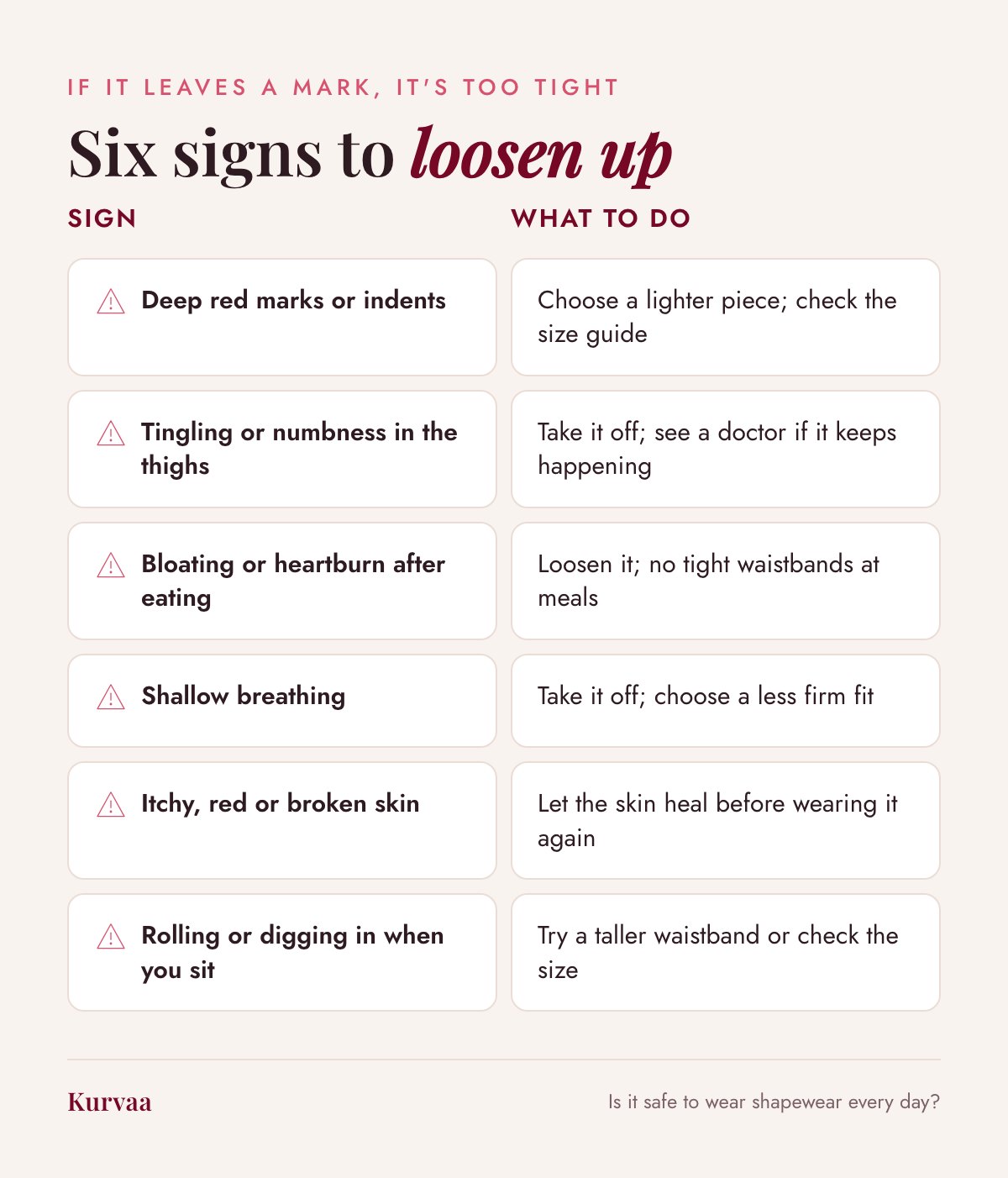
| Sign | What it can mean | What to do |
|---|---|---|
| Deep red marks or indents | Too much pressure on the skin | Choose a lighter piece, and check the size guide's waist and hip range |
| Tingling or numbness in the thighs | A nerve is being pressed | Take it off; see a doctor if it keeps happening |
| Bloating, acid or heartburn after eating | Pressure on your stomach | Loosen it, and avoid tight waistbands at meals |
| Shallow breathing | The garment is restricting your diaphragm | Take it off and choose a less firm fit |
| Itchy, red or broken skin | Friction and trapped sweat | Let the skin heal before wearing it again |
| Rolling or digging in when you sit | Wrong size or wrong style | Try a taller waistband, or check the size guide |
Can tight shapewear cause tingling or numbness?
It can. Cleveland Clinic warns that ultra-tight shapewear could compress nerves, "particularly if you are thin", causing tingling or numbness. One named condition is meralgia paresthetica: numbness or burning on the outer thigh. Cleveland Clinic lists tight clothing, girdles and stockings as risk factors and says about 85% of people recover with conservative treatment.
The fix is usually simple: stop wearing the tight garment and give the area time. Cleveland Clinic suggests looser clothing and avoiding tight belts. If tingling or numbness doesn't go away after you've stopped wearing tight clothes, see a doctor.
The same Cleveland Clinic article notes that a garment that's very tight around the hips can also restrict circulation to the lower legs. That's another reason to choose your size by comfort, not by how small it is.
Does shapewear affect digestion or breathing?
Very tight shapewear can affect both. Dr Manek's BBC Science Focus piece notes that tight clothing could restrict diaphragmatic movement and lead to shallow breathing. The NHS advises people with reflux not to wear clothes that are tight around the waist. Choosing a fit you can breathe and eat in is the simplest way to lower the chance of both.
In practice, that means you should always be able to take a full, deep breath and eat a normal meal in your shapewear. If you can't, it's too tight. On days with a big meal, such as a wedding lunch or a festival dinner, choose a lighter piece. For a waist-only option you can loosen after eating, see our comparison of tummy control shapewear and tummy belts.
How long should you wear shapewear in a day?
There's no official number of hours, but the guidance points in one direction: wear it for the occasion, not around the clock. BBC Science Focus notes that continuous wear can chafe the skin, and tight, non-breathable fabrics can cause irritation and rashes. A working day or a single event, with breaks, fits that advice. Sleeping in it doesn't.
On long days, such as weddings, travel or festivals, build in breaks and change into something looser between events. Our lehenga guide has a full wedding-day plan, and the saree guide covers a day in a saree.
When to check with a doctor first
Most people don't need medical advice to wear everyday shapewear. If you're pregnant, have circulation problems, nerve symptoms, reflux, a skin condition or recent surgery, ask your doctor before wearing anything firm. Shapewear is a clothing layer for comfort and confidence, not a medical or recovery garment, and it can't replace one.
Washing shapewear so it lasts
Gentle washing keeps shapewear fitting the way it should. A Cleveland Clinic dermatologist recommends washing intimates like bras after every two to three wears (sooner if you sweat a lot), in cold water, and never in the dryer, because "the heat and vibration will ruin the fit." The same care suits stretchy shapewear knits.
- Hand wash cold with a mild detergent, or use a mesh bag on the gentlest machine cycle.
- Wash after every few wears, and after every hot or sweaty day.
- Dry flat in the shade. Don't tumble dry, wring or hang it in direct sun.
- Skip bleach, and follow the care label.
- Rotate two pieces so each one gets time to recover its shape.
When a piece starts rolling, sagging or losing its stretch, replace it. A worn-out shaper doesn't smooth as well, and a stretched waistband rolls and digs in.
Kurvaa pieces for everyday wear
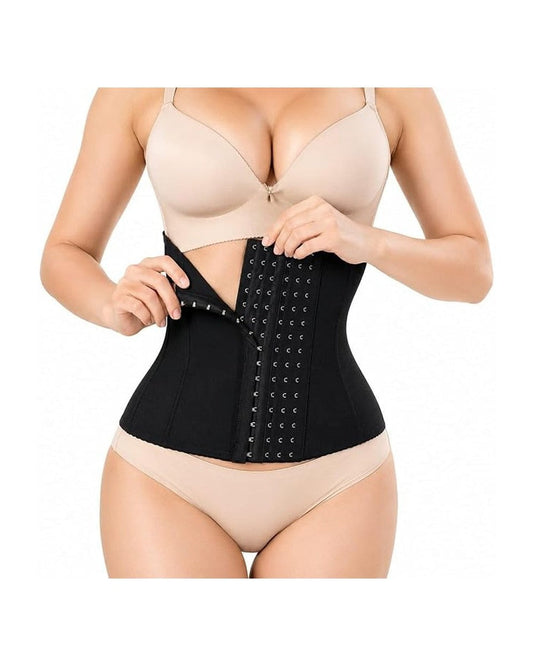
For daily wear, start with a light piece like the Seamless High-Waist Shaper Shorts, and keep the firmer Sculpt Fit 836 for occasions. If you prefer a hold you can adjust through the day, the Hook & Eye Tummy Belt loosens in seconds. Not sure which suits you? Contact us before you order and we'll help you choose.
Browse all of them in all shapewear.
Related reading
- Types of shapewear: which body shaper for which outfit?
- How to stop thigh chafing: shaper shorts and other fixes
Frequently asked questions
Can I sleep in shapewear?
No. Cleveland Clinic's doctor advises against wearing shapewear for extremely long periods or sleeping in it. Your skin and body need time without compression. Take it off at the end of the day and sleep in loose, comfortable clothing.
Can shapewear cause numbness in the thighs?
Very tight shapewear can press on nerves and cause tingling or numbness, according to Cleveland Clinic. If it happens, take it off and give the area time. See a doctor if numbness continues after you've stopped wearing tight clothes.
How do I know if my shapewear is the right size?
It should feel firm but let you sit, breathe deeply and eat comfortably, without rolling or digging in. Check for marks when you take it off. Cleveland Clinic's rule is simple: if it leaves a mark, it's too tight, so switch to a lighter piece.
How often should I wash shapewear?
After every two to three wears, and after any hot or sweaty day. A Cleveland Clinic dermatologist gives this advice for bras, and it suits shapewear too. Hand wash in cold water, dry flat in the shade and never tumble dry.
Sources
- Cleveland Clinic, "A Doctor's Advice on Wearing Shapewear", 6 June 2019. Retrieved 2026-11-15. health.clevelandclinic.org
- BBC Science Focus, Dr Nish Manek, "The hidden health risks caused by shapewear, explained by a doctor", 7 July 2024. Retrieved 2026-11-15. sciencefocus.com
- Cleveland Clinic, "Meralgia Paresthetica", updated 27 March 2023. Retrieved 2026-11-15. my.clevelandclinic.org
- NHS, "Heartburn and acid reflux", last reviewed 20 November 2023. Retrieved 2026-11-15. nhs.uk
- Cleveland Clinic, "How Often Do You Really Need To Wash Your Bras?", 24 March 2022. Retrieved 2026-11-15. health.clevelandclinic.org