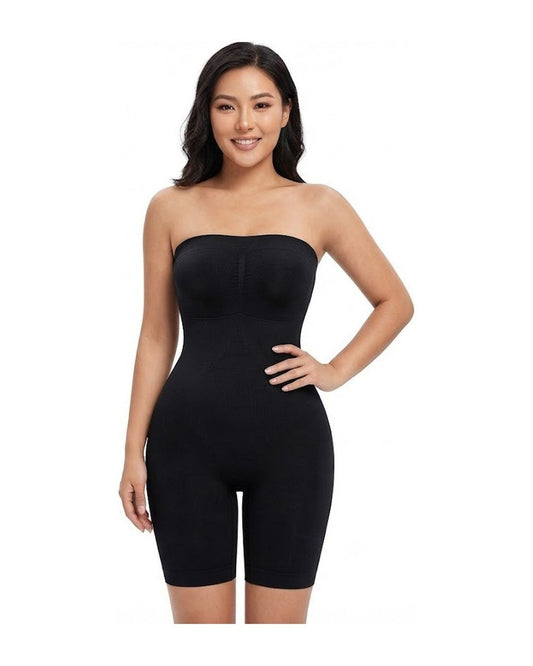
How to Wear Shapewear Under a Saree (Without It Showing)
MayaA saree is metres of unstitched fabric held up by one thing: the petticoat tied at your waist. That makes the layer underneath it matter more than most people think. Shapewear for a saree goes on first, the petticoat goes over it, and the drape sits on top. Get that order and the fit right, and the saree falls in clean pleats with no lines, no bunching and no tugging at your waist all evening.
There's a second reason to think about this layer. In a 2003 study of 140 saree-wearing women at a Kerala hospital, dermatologists found waist skin changes in 70.7% of them, and they blamed the tight petticoat cord. So this guide covers both: how to wear shapewear under a saree so it doesn't show, and how to keep your waist comfortable while you do.
Key takeaways
- Order: shapewear first, petticoat over it, then the saree.
- Pick the piece by saree: light shorts for daily cotton, firmer hold for silk and wedding drapes.
- Check the midriff gap in a mirror; fold the waistband down if it peeks out.
- Tie the petticoat snug, never tight. Dermatologists link tight cords to waist skin marks.
Where does shapewear go under a saree?
Shapewear is the first layer, worn directly on your skin under the petticoat. Dermatologists writing in the Indian Journal of Dermatology, Venereology and Leprology in 2003 described the petticoat cord as the main source of waist pressure for saree wearers. That's a reason to keep the cord loose. The shaper goes underneath so the saree tuck has a smooth, flat base, but it won't stop a tight cord from pressing.
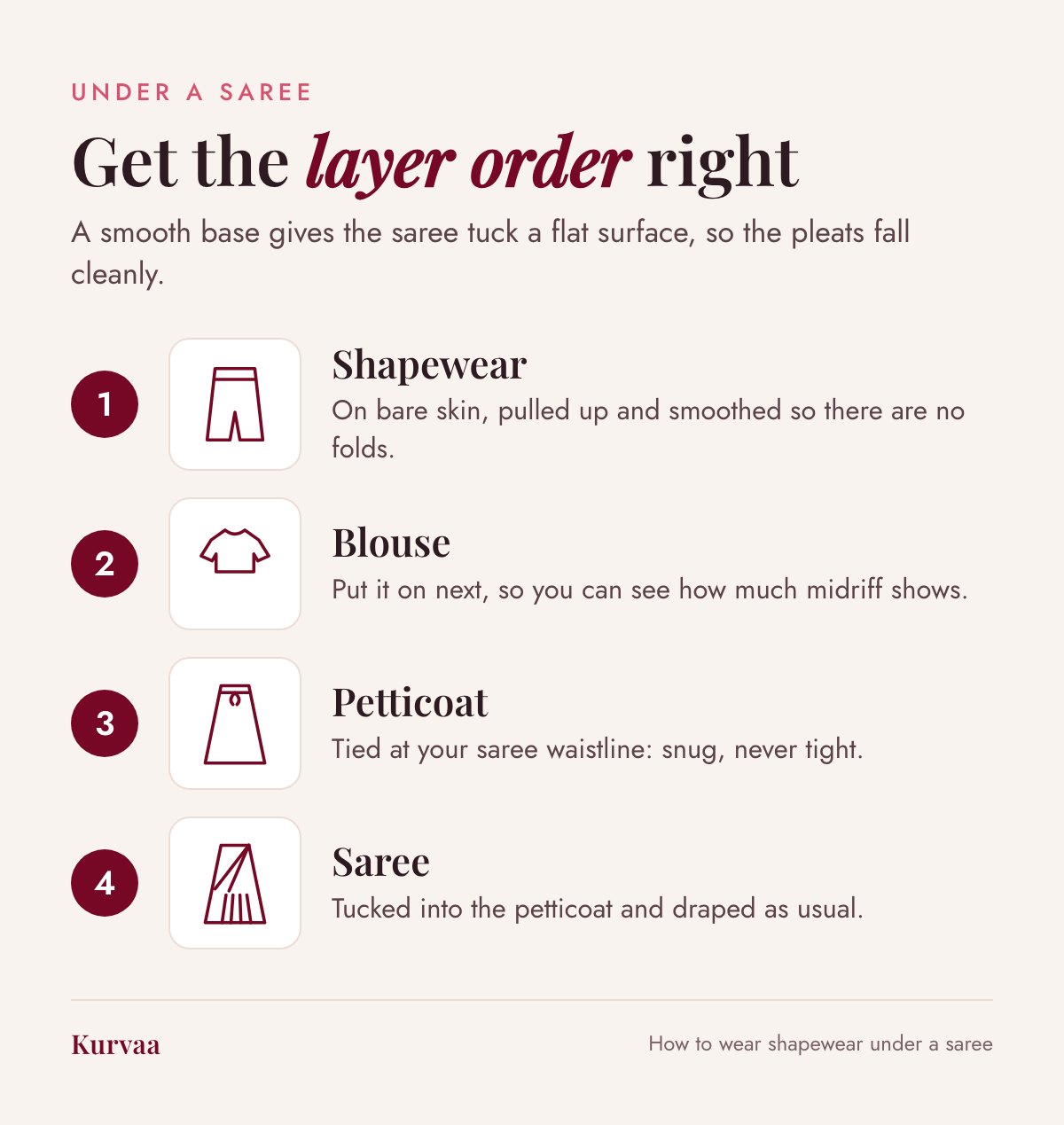
The full order looks like this:
- Shapewear on bare skin, pulled up and smoothed so there are no folds.
- Blouse, so you can check how much midriff shows before you drape.
- Petticoat, tied at your usual saree waistline over the shapewear.
- Saree, tucked into the petticoat and draped as usual.
Why does the order matter so much? Because the saree is tucked straight into the petticoat. Any ridge underneath, a rolled waistband, a bunched hem, shows up as a bump in the pleats. A smooth, seamless base layer gives the tuck a flat surface to grip.
For a wider look at the different garments available, see our guide to the types of shapewear.
Which shapewear works best with a saree?
The right piece depends on the saree's fabric and the occasion more than anything else. Light cotton and linen sarees need very little hold. Heavy silks, Banarasis and embellished wedding sarees pull down on the petticoat all day, so a firmer, taller waistband helps. Sheer chiffons and georgettes need a skin-tone shade more than extra control.
| Saree | What it needs | Shapewear to choose |
|---|---|---|
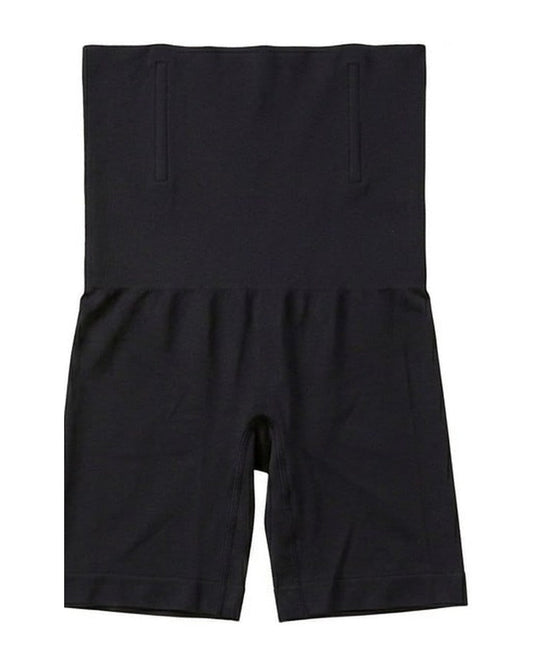
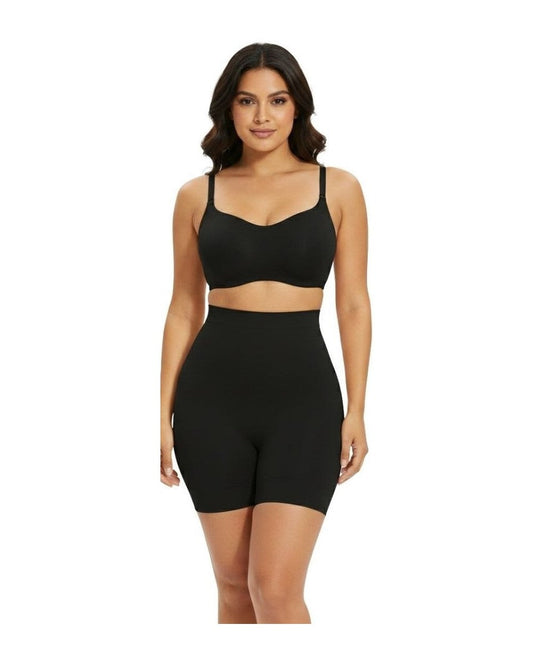
| Daily cotton, linen, office sarees | Light smoothing, comfort for 8+ hours | Seamless high-waist shaper shorts |
| Silk, Kanjeevaram, Banarasi | Firmer hold, a waistband that won't roll under weight | Extra-high-waist tummy control shaper |
| Chiffon, georgette, organza | No visible lines through sheer fabric | Seamless shorts in a shade close to your skin |
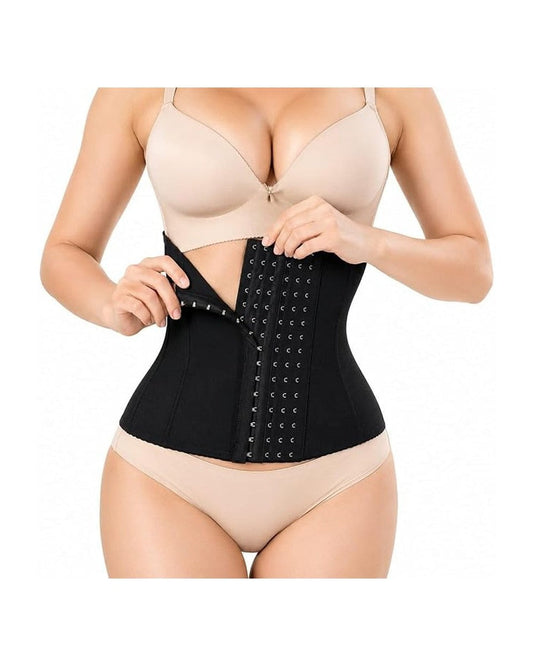
| Saree with a defined-waist look | Waist definition you can adjust | A hook-and-eye tummy belt (loosen it after meals) |
| Long wedding or festival day | Hold that lasts, plus thighs that don't rub | Extra-high-waist shaper with leg panels |
Shorts beat briefs under a saree for one practical reason: thigh chafing. A saree keeps your legs together under a single layer of fabric, so skin-on-skin rubbing is common on warm days. Mid-thigh legs stop it. We cover that in more detail in how to stop thigh chafing.
How do you stop shapewear showing at the midriff?
Most saree drapes leave a strip of skin visible between the blouse and the pleats, and that's where shapewear gets spotted. A high-waist shaper is built to sit above the navel, which is great under a kurti but can peek out of that midriff gap if your blouse is short or you drape low.
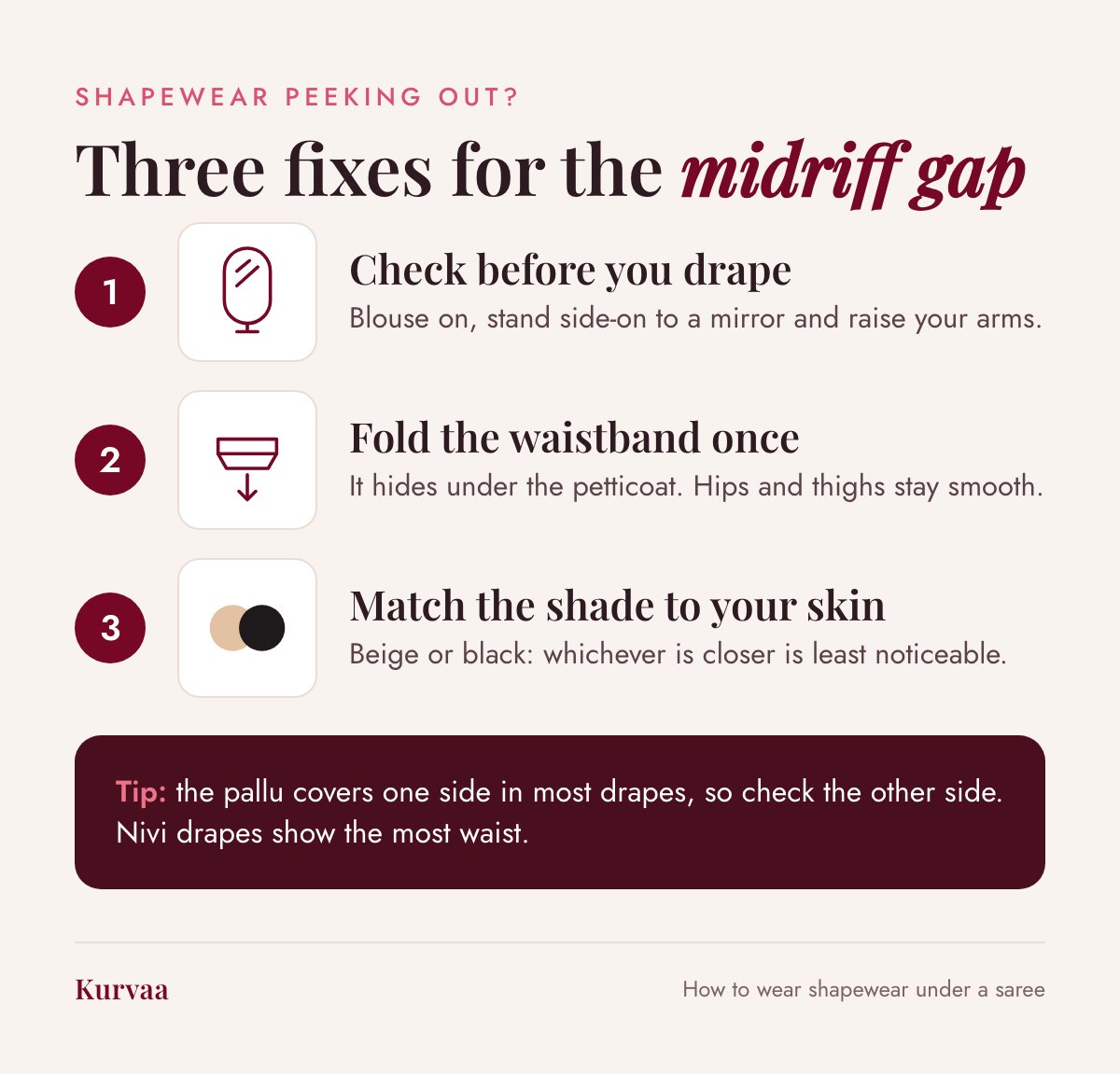
Three fixes work, in this order:
- Check before you drape. Put on the blouse, stand side-on to a mirror and raise your arms. If fabric shows, deal with it now, not after the pleats are pinned.
- Fold the waistband down once. A seamless knit waistband can be folded to sit at your petticoat line. You keep the smoothing over the hips and thighs, and the fold hides under the petticoat.
- Match the shade to your skin. If a little does show, the shade closest to your skin is least noticeable. On deeper skin tones, or under dark sarees, that may be black.
The pallu covers the midriff on one side for most drapes, so you usually only need to check the other side. Nivi drapes show more waist than Bengali or Gujarati styles, so check those most carefully.
Why does the petticoat cord matter as much as the shapewear?
A tight petticoat cord can cause more trouble than any shapewear. In November 2024, a BMJ Case Reports paper described skin damage at the waist in two South Asian women and stated "it is the tightness of the waist cord that's to blame." The authors recommended a loose petticoat beneath the saree.
That 2024 report covers just two cases, so it's a reason for care, not for alarm. The 2003 IJDVL study is the broader one: 99 of 140 saree wearers (70.7%) had waist lesions, though only 26 noticed any symptoms. Its authors suggested "broad belts with hooks" in place of a thin cord, because a wider band spreads the pressure.
What does that mean when you're getting dressed?
- Tie the petticoat just firm enough to hold the tuck. You should fit two fingers under the cord.
- Use a petticoat with a wide drawstring or a hook-and-band closure if you can find one.
- Don't let a tight cord sit on top of a rolled shapewear waistband. Smooth the shaper flat first.
- Shift the cord's position a little on days you wear a saree back to back, so it doesn't press on the same line.
Shapewear doesn't prevent cord marks, and nobody should promise that. Comfort comes from not over-tightening anything.
Choosing beige or black for a saree
Pick by the saree first, then by your skin. Light, pastel and sheer fabrics show dark colours through them, so beige usually works best there. Dark sarees with a dark petticoat suit black, because beige can show as a pale shadow through thin silk. When either would work, choose the shade closer to your skin, since the midriff gap can show a little of the waistband.
If you wear sarees often, owning one of each covers every drape in your wardrobe.
How long to wear it with a saree
A day of saree wearing is reasonable if the shapewear fits and you aren't feeling pinched. Take it off when you change for the night. For the signs it's too tight and how many hours is sensible, read whether it's safe to wear shapewear every day.
Kurvaa pieces for sarees
For daily cotton and office sarees, the Seamless High-Waist Shaper Shorts are light enough to forget you're wearing them, and the legs stop chafing. For silk, wedding and festival sarees, the Sculpt Fit 836 High-Waist Shaper has a taller ribbed waistband with two soft stays that help stop rolling. If you want waist definition you can adjust through the day, try the Hook & Eye Tummy Belt.
Each comes in beige and black. Not sure about fit? Check the size guide on any product page. You can browse them together in shapewear for saree and lehenga.
Related reading
- Shapewear for lehenga: what to wear under your wedding outfit
- Tummy control shapewear vs tummy belt: which should you wear?
Frequently asked questions
Do you wear shapewear over or under the petticoat?
Under. Shapewear is the first layer on your skin, and the petticoat is tied over it. That way the saree tuck grips a smooth, flat surface. Wearing it over the petticoat would add bulk exactly where the pleats are tucked in.
Can you wear shapewear with a low-waist saree drape?
Yes. Fold a seamless waistband down once so it sits at your petticoat line, below the visible midriff. You keep the smoothing over hips and thighs. Check side-on in a mirror with your arms raised before you pin the pleats.
Is shapewear necessary under a saree?
No, it's a choice. Many women wear it because it smooths the line under fitted silk, stops thigh chafing in the heat and gives the tuck something to grip. If you're comfortable without it, a well-fitted petticoat that's tied snug but not tight is all a saree needs.
What colour shapewear is best under a white or cream saree?
Choose beige, close to your skin tone. White fabric shows black clearly and can even show white shapewear as a bright outline. A skin-tone shade disappears under light and sheer sarees.
Sources
- Eapen BR, Shabana S, Anandan S, "Waist dermatoses in Indian women wearing saree", Indian Journal of Dermatology, Venereology and Leprology, 2003;69(2):88-89. Retrieved 2026-11-15. ijdvl.com/?p=14734
- "Petticoat cancer: Marjolin ulcer of the waist in South Asian women (a site-specific malignancy)", BMJ Case Reports, 5 November 2024, DOI 10.1136/bcr-2024-262049. Retrieved 2026-11-15. doi.org/10.1136/bcr-2024-262049 (summary: BMJ Group news release)